
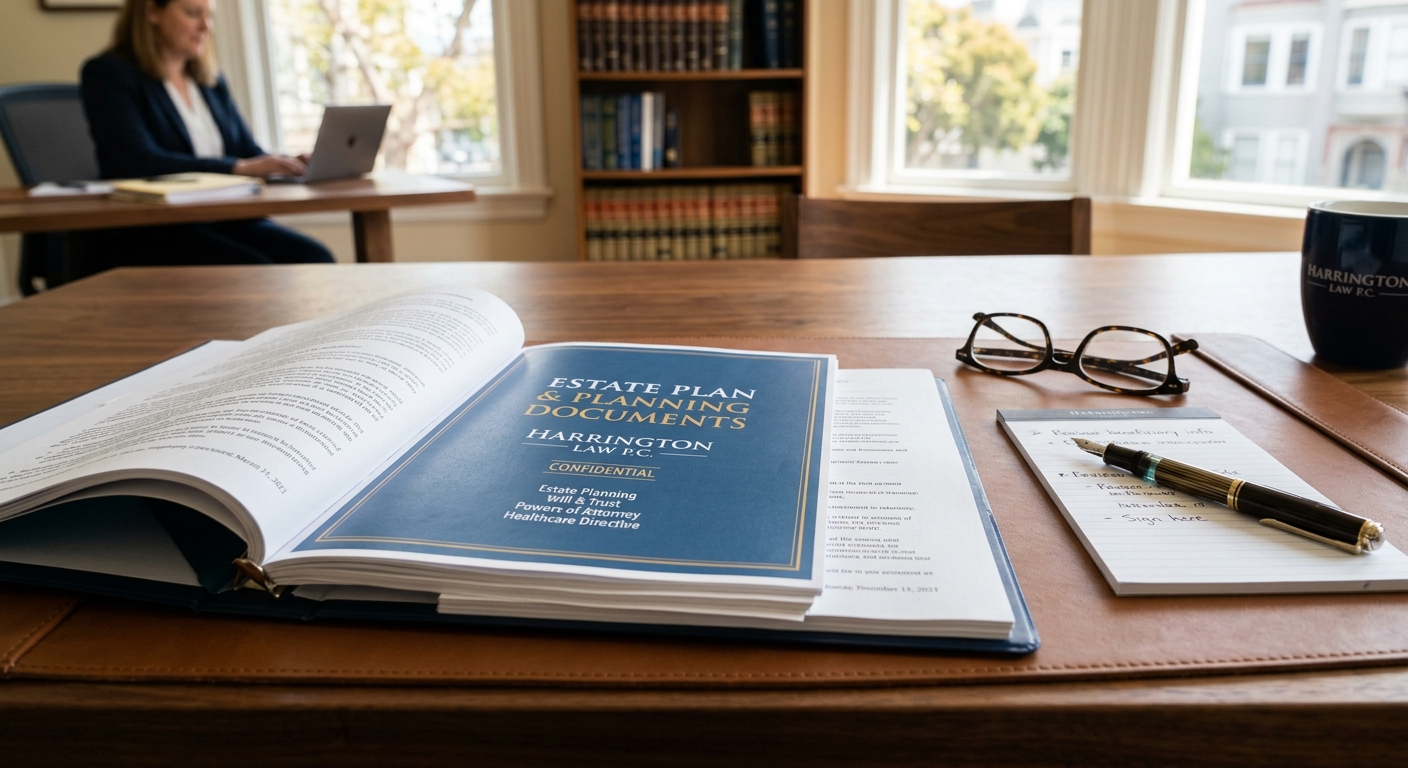
Wills vs. Trusts in California: Key Differences and How Harrington Law P.C. Can Help
Many Californians know they need an estate plan but aren’t always sure whether a will, a trust, or both are right for them. Because California has unique laws around probate, property, and trust administration, choosing the right approach can make a significant difference in how smoothly your estate is handled later on. Below is a clear, practical breakdown of how wills and trusts differ in California—plus how Harrington Law P.C. supports clients across the San Francisco Bay Area and North Bay in building strong, personalized estate plans.
Wills and Trusts: What They Are
At the most basic level, a will outlines your wishes for how your assets should be distributed and names guardians for minor children. It takes effect only after your passing.
A trust—most commonly a revocable living trust in California—is a legal arrangement where a trustee manages assets for beneficiaries. A trust begins working while you’re still alive and continues after your death.
Why Wills Go Through Probate in California
One of the biggest differences between a will and a trust in California is the probate process. Probate is the court-supervised method of distributing assets after someone dies with only a will or without any estate planning documents.
In California, probate is known for being:
- Lengthy—often taking 12–18 months or more
- Expensive—largely due to statutory attorney and executor fees
- Public—any documents filed in probate become part of the public record
Because California property values are high, even modest estates can trigger probate unless assets are held in a trust or otherwise exempt. As a Bay Area estate attorney team, we frequently help families navigate probate and understand firsthand how burdensome the process can be without proper planning.
How Trusts Help Families Avoid Probate
A revocable living trust is often the cornerstone of estate planning in California because it helps avoid probate entirely—as long as assets are properly titled in the trust. Avoiding probate means your family can typically settle your affairs more quickly, privately, and with reduced costs.
Trusts also offer flexibility and control, such as:
- Managing assets responsibly for young or vulnerable beneficiaries
- Protecting privacy for complex estates
- Facilitating smooth trust administration and continuity
- Avoiding court involvement in many cases, including conservatorships
For blended families, real estate owners, or those with significant assets, a trust often becomes essential for ensuring wishes are carried out properly.
When a Will Is Still Necessary
Even with a trust, a “pour-over will” is still recommended in California. This type of will captures any assets not formally transferred into the trust during your lifetime and directs them into the trust upon your passing.
A will is also the only legal instrument that allows you to name guardians for minor children—an important part of estate planning for parents of any age.
Tax Considerations in California Estate Planning
Unlike some states, California does not have a state-level estate or inheritance tax. However, federal estate tax rules may still apply depending on the size of your estate. While neither a will nor a revocable trust directly reduces estate taxes, proper planning can help minimize tax burdens using coordinated strategies within your overall estate plan.
At Harrington Law P.C., we help clients incorporate smart planning techniques into both wills and trusts, ensuring assets are structured in a way that supports long‑term financial goals.
How Harrington Law P.C. Supports You Through Every Step
As a firm deeply rooted in the San Francisco and North Bay communities, we understand the specific challenges families face when navigating estate planning, probate law, and trust administration. Our work frequently involves serving as trustees, administrators, partition referees, and fiduciaries, which gives us a unique, hands‑on perspective when helping clients design effective estate plans.
Here’s how we can help you choose and set up the right plan:
1. Personalized Estate Planning for California Families
We develop tailored estate plans that reflect your values, your family dynamics, and your long‑term goals. Whether a will, a trust, or both makes sense depends on your assets, your beneficiaries, and the level of protection and privacy you want to maintain.
2. Guidance Through Trust Administration
Administering a trust can be complex, especially when real estate, business interests, or multiple beneficiaries are involved. Our team provides support throughout the administration process or, when needed, can step in as a professional trustee. This includes fiduciary services, forensic accounting, and handling disputes that sometimes arise during trust administration.
3. Probate Support When a Will Is Involved
When a loved one leaves only a will, probate is unavoidable. We guide families through the entire court process, helping reduce stress and ensuring deadlines and legal requirements are met.
4. Litigation Support When Issues Arise
Sometimes disagreements occur regarding wills, trusts, or conservatorships. As a firm experienced in trust litigation and will contests, we step in to protect your interests and help resolve disputes efficiently and compassionately.
5. Support With Complex Family or Property Situations
In the Bay Area, it’s common for estates to include multiple properties, investment accounts, or complex family arrangements. With experience acting as court‑appointed trustees, receivers, and partition referees, we bring practical, real‑world expertise to even the most complicated matters.
FAQ
Do I need both a will and a trust in California?
Most California residents benefit from having both. A trust manages and distributes assets privately and efficiently, while a will designates guardians and handles anything not funded into the trust.
Is a trust better than a will for California homeowners?
In many cases, yes. Because probate is costly and time‑consuming in California, holding real estate in a trust helps families avoid delays and unnecessary expense.
Can a will help avoid probate?
No. Wills in California must go through probate unless the estate is small enough to qualify for simplified procedures.
How long does California probate take?
Most probates last between 12 and 18 months, though complicated estates can take longer. A properly funded trust helps avoid probate altogether.
How can Harrington Law P.C. help with my estate plan?
We assist with creating and updating wills and trusts, trust administration, probate, fiduciary services, conservatorships, and trust litigation. Our approach emphasizes clarity, compassion, and personalized guidance for every client we serve.